TAZI Decision Models on Tabular Data
Zero-shot attrition (churn) scoring and fewer false positives with TAZI decision models — a wealth management attrition study
TAZI Team
Key results
- Decision models are a now a TAZI product feature. Use Jev, or smaller decision models such as Laya and ettinx.
- They work on tabular data, not just text. TAZI’s explainable machine learning turns each row into readable explanations the decision model can use.
- On top of an ML model, they improve it. Scoring with ML score × decision score (Jev, Score mode) raised the top-25% hit rate by 2.5% and cut false positives by 7%.
- Speed vs. footprint. Jev answers in ~155 ms per record. Laya runs on CPU — no GPU needed.
- Useful even without training data. With inputs only, the zero-shot decision model reached 1.5× the random hit rate; adding global ML explanations raised it to 1.7×, with 16% fewer false positives.
1. Decision models in TAZI
A decision model answers a fixed question for every record and returns a typed answer with a probability — a choice, a score or a Yes/No — instead of free text. That makes answers sortable, thresholdable and auditable.
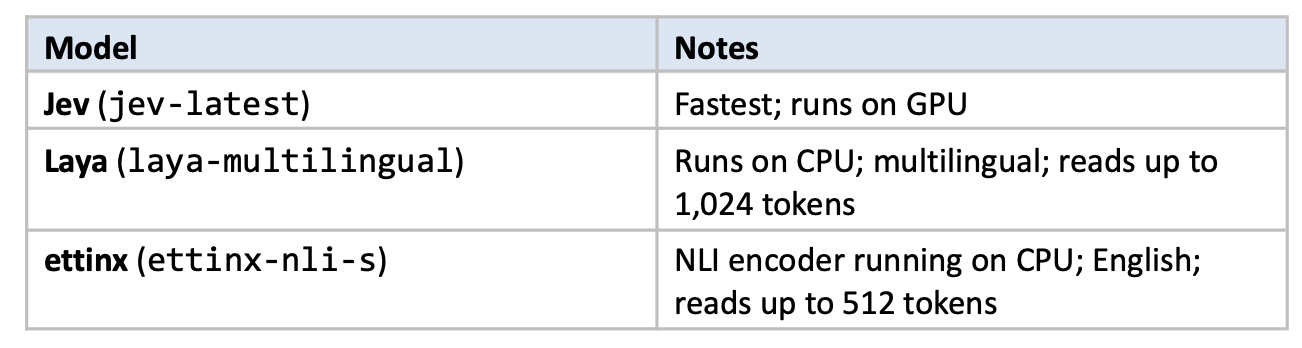
Models present a uniform API through TAZI LLM Gateway, allowing easy switching between models and experimentation. TAZI Decision Server enables easy deployment of open-weights decision models, so client data stays in house. You can combine multiple decision model outputs into one answer.
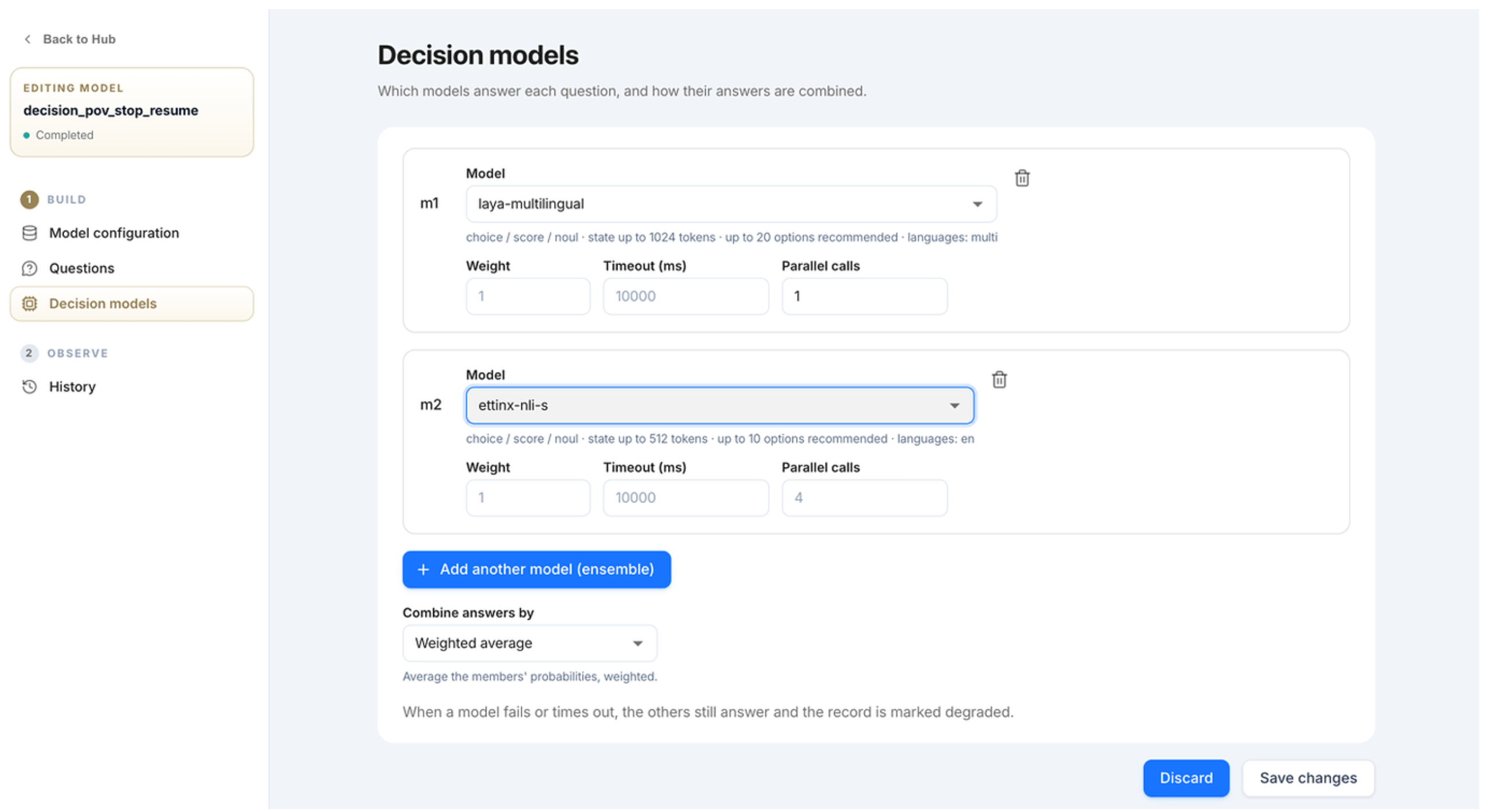
Decision models in TAZI: each model shows the question types it answers, how much text it reads and its languages.
2. Why this works on tabular data
Decision models read text. TAZI’s explainable ML supplies it: for every prediction q(x) it produces an explanation r(q(x)) — the rule path that led to the score, for example:
cause5_service_failures ≥ 3 · plan_scope_dimensions < 1 · cause2_profiling_depth < 4 · no cash-management account
Across a dataset these form R(Q(X)), a global set of conditions under which clients leave or stay. The decision model gets the client’s fields x plus these explanations.
3. Study setup
- Data: 871 wealth management clients the ML model had flagged as likely to churn (probability > 0.5); a deterministic 2% sample. 33.5% actually churned — the random-pick baseline.
- Inputs x: ~70 tabular fields — account, portfolio, advisor, service and relationship data.
- Question: Score mode, 0 = remain, 1 = churn. One model per run, one pass per record.
- Metrics: hit rate and false positives in the top 25% of clients ranked by each score; cumulative gains.
4. Results
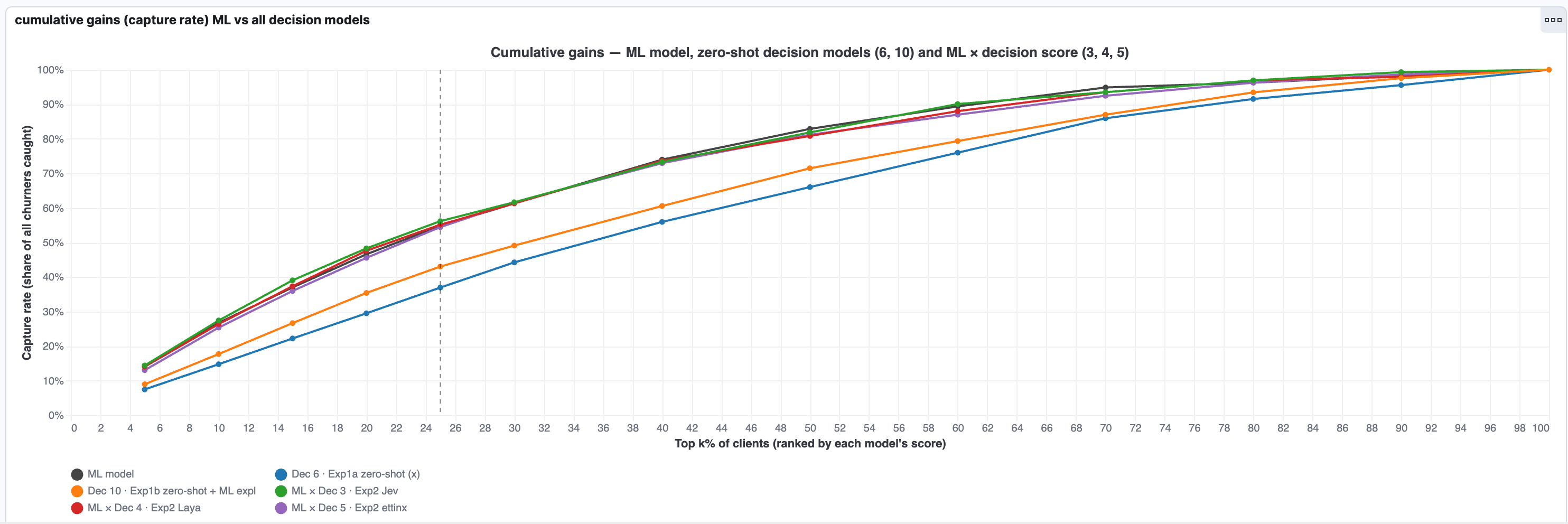
Figure 1. Cumulative gains: share of all churners caught in the top k% of clients.
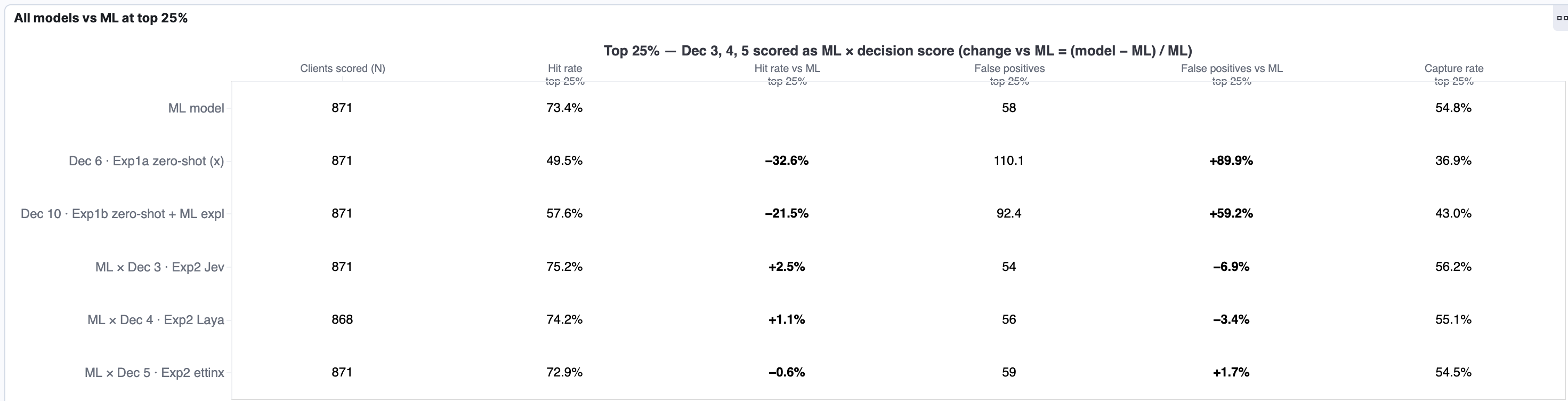
Figure 2. Top 25%: hit rate, false positives and capture rate; change vs ML = (model − ML) / ML.
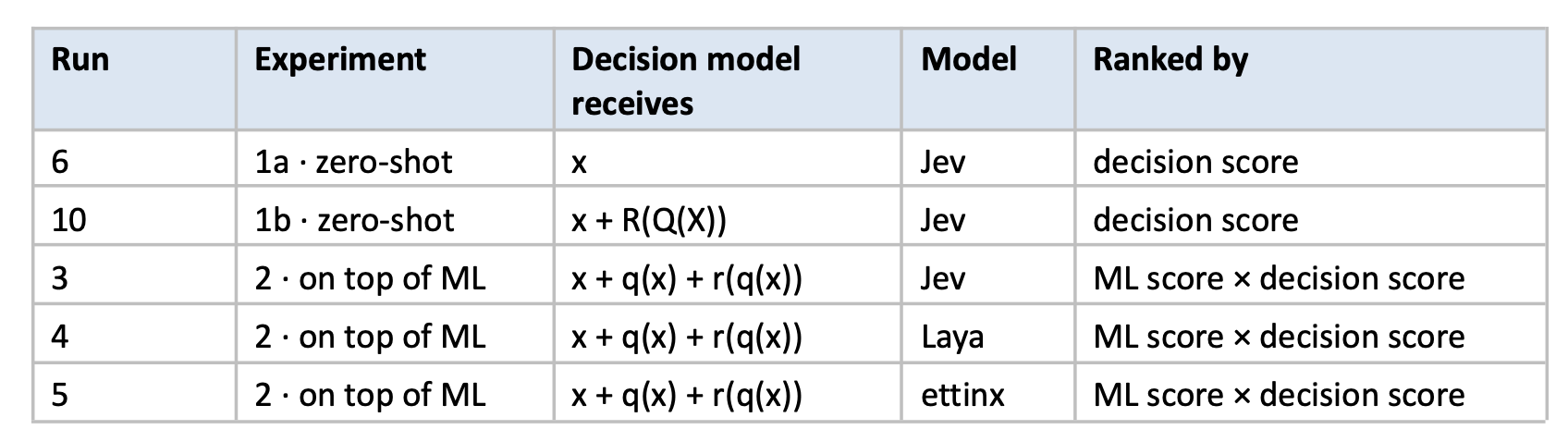
Experiment 2 — on top of the ML model (top 25%).
- ML × Jev: hit rate 73.4% → 75.2% (+2.5%); false positives 58 → 54 (−6.9%); capture 54.8% → 56.2%.
- ML × Laya: +1.1% hit rate, −3.4% false positives.
- ML × ettinx: −0.6% hit rate, +1.7% false positives.
Experiment 1 — zero-shot, no training data (top 25%).
- Inputs only (x): 49.5% hit rate — 1.5× random (33.5%).
- Inputs + global explanations (x + R(Q(X))): 57.6% — 1.7× random. Versus inputs only: +16% hit rate, −16% false positives (110 → 92).
5. Cost and latency
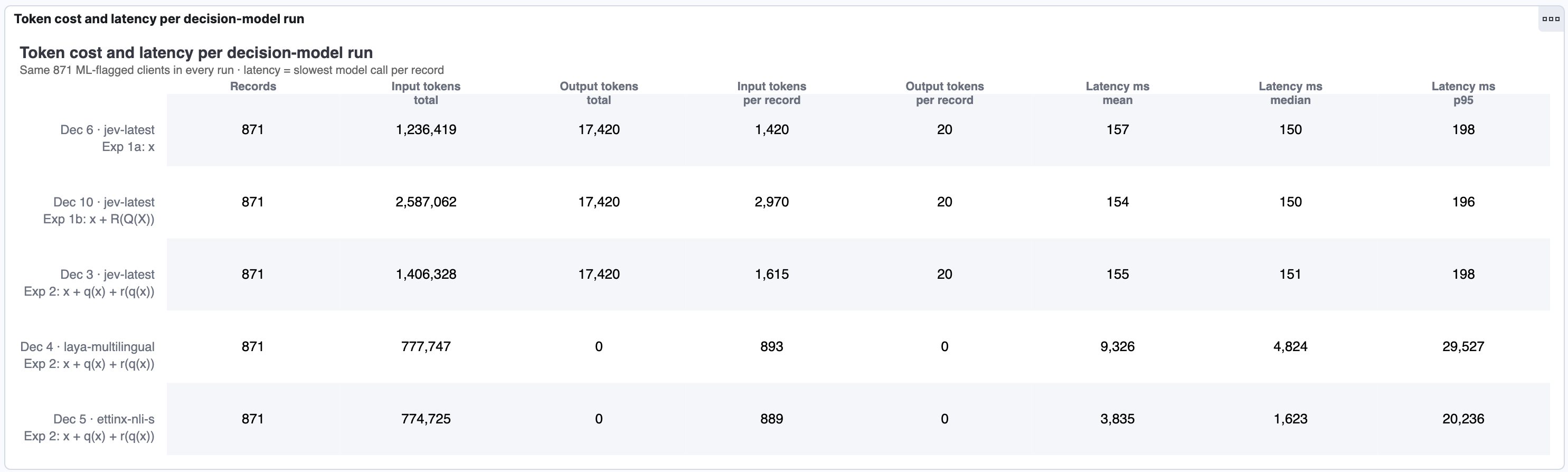
Figure 3. Token cost and latency per run (871 records each).
- Jev: ~155 ms mean, ~200 ms p95 per record. Global explanations double input tokens (1,420 → 2,970 per record) with no latency cost.
- Laya (CPU): 9.3 s mean per record; 3 of 871 records failed.
- ettinx: 3.8 s mean per record.
- Laya and ettinx read fewer tokens per record because of their shorter input windows.
6. What this means
- No training data? Decision models can still rank tabular records well above random, and ML explanations make them markedly better.
- Have an ML model? Bring your existing ML model to TAZI to generate explanations, and put a decision model on top of the ML score and its explanation to trim false positives.
- No GPU? Laya can run on CPU.
This is an initial sample study on wealth management attrition data. Results may vary by problem and dataset.
Try it on your data
Try TAZI decision models, enterprise-ready, on your own data: Request a demo or email [email protected].